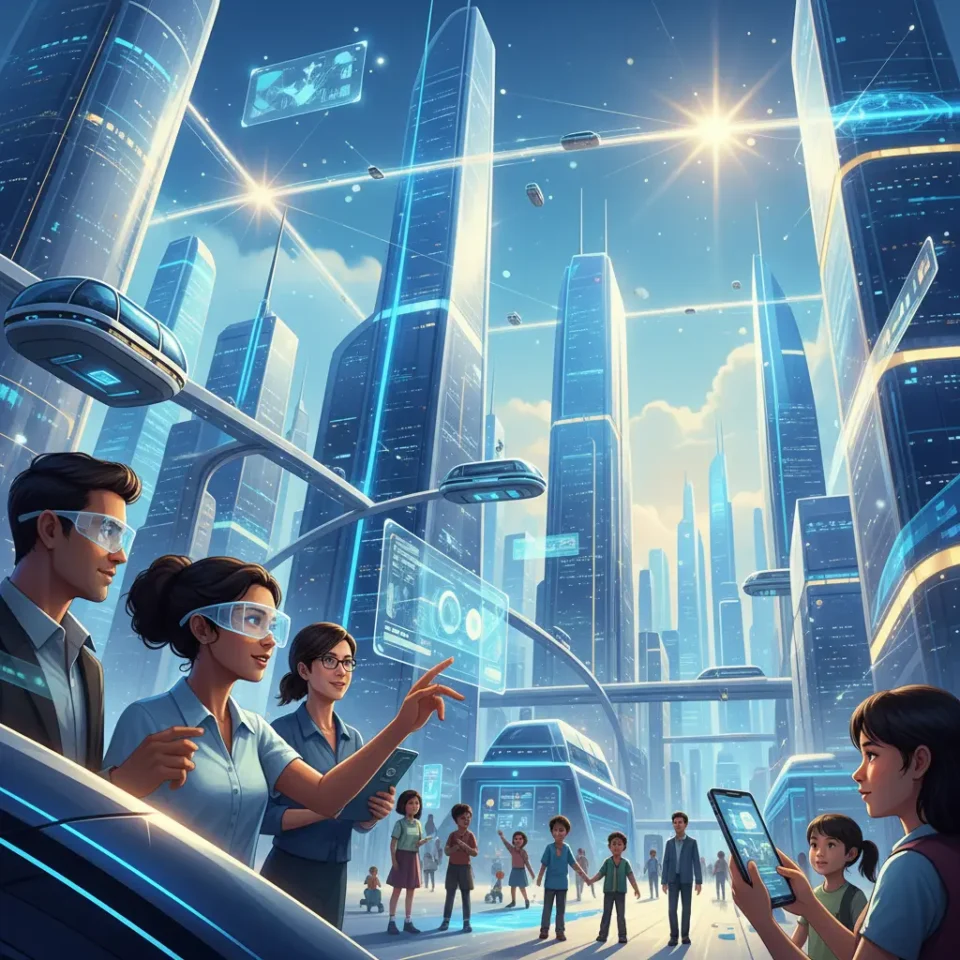
A profound shift is happening in the way we view our collective future. For years, narratives about technology heavily focused on dystopian outcomes and unintended consequences. Now, a growing sense of global optimism is taking root. Innovators, scientists, and everyday users are shifting their attention toward the incredible potential of new digital tools. We are seeing a renewed focus on tech hopes—the belief that our greatest challenges can be solved through strategic, responsible innovation.
This shift is driven by tangible progress. We are witnessing breakthroughs that were once confined to science fiction. Solutions for climate change, disease, and global inequality are slowly becoming reality. The conversation has moved from fearing what machines might do to us, to exploring what we can achieve alongside them.
Understanding these emerging trends helps us see exactly why the upcoming decade is poised to be one of the most transformative periods in human history.
The Transformative Power of Emerging Trends
Several core areas of technology are currently experiencing exponential growth. These fields are moving past the experimental phase and starting to deliver real-world benefits.
Artificial Intelligence as a Catalyst
Artificial intelligence is fundamentally changing how we approach complex problems. Machine learning algorithms can process massive datasets in seconds, identifying patterns that human researchers might miss. This capability is accelerating research across countless disciplines. AI is helping scientists discover new materials for cleaner batteries, predicting weather patterns with unprecedented accuracy, and optimizing agricultural yields to feed a growing population.
Breakthroughs in Sustainable Energy
The transition to renewable energy is accelerating rapidly. Solar and wind power are becoming cheaper and more efficient every year. We are also seeing massive improvements in battery storage technology, allowing us to capture and use green energy even when the sun isn’t shining or the wind isn’t blowing. Next-generation tech hopes also include advancements in nuclear fusion and green hydrogen, which promise to deliver clean, virtually limitless power to the grid.
A New Era of Biotechnology
Biotechnology is rewriting the rules of healthcare. Tools like CRISPR gene editing are allowing scientists to target the root causes of genetic disorders. We are moving toward a model of personalized medicine, where treatments are tailored to an individual’s specific genetic makeup. Additionally, mRNA technology—brought to the forefront by recent global health efforts—is now being researched as a potential treatment for various cancers and other difficult diseases.
Bridging the Global Digital Divide
One of the most inspiring tech hopes is the democratization of essential services. For decades, geographic location dictated a person’s access to quality education and healthcare. Technology is actively dismantling those barriers.
Low-earth orbit satellite networks are bringing high-speed internet to remote and underserved regions. This connectivity is a lifeline. It enables telehealth platforms, allowing patients in rural villages to consult with specialists halfway across the globe. A simple smartphone can now serve as a diagnostic tool, tracking vital signs and managing chronic conditions.
Education is experiencing a similar revolution. Digital classrooms and open-source learning platforms give students anywhere access to world-class curriculums. Virtual reality is starting to provide immersive training experiences for complex skills, leveling the playing field for ambitious learners regardless of their socioeconomic background.
Addressing the Challenges Ahead
Optimism must be paired with caution. Realizing these tech hopes requires us to navigate significant hurdles. We cannot ignore the ethical implications of deploying powerful new systems.
Privacy remains a massive concern. As devices collect more data to fuel personalized experiences, protecting that information from misuse is critical. We need robust cybersecurity measures and transparent data policies to ensure users maintain control over their digital identities.
Algorithmic bias is another major challenge. If AI models are trained on flawed or unrepresentative data, they will perpetuate existing inequalities. Responsible innovation demands that we build diverse development teams and thoroughly audit algorithms before they are released. We have to prioritize fairness and accountability just as highly as speed and efficiency.
The Crucial Human Factor
Technology itself is entirely neutral. It is simply a tool waiting for direction. The true engine of a hopeful future is the human factor.
Developers and engineers carry the responsibility of building systems with integrity and foresight. Visionaries and policymakers must collaborate to create frameworks that encourage innovation while protecting the public interest. Most importantly, everyday users have a massive role to play. By demanding ethical products, supporting sustainable companies, and using technology to uplift their communities, consumers dictate the direction of the market.
Our collective choices will determine whether these powerful new tools are used to divide us or unite us.
Looking Ahead to a Brighter Tomorrow
The intersection of AI, green energy, and biotechnology gives us the resources to tackle global issues that previously felt insurmountable. By focusing on responsible development and equitable access, we can build a world that is healthier, more connected, and more sustainable. The tech hopes of today are laying the groundwork for a thriving society. The next decade holds immense promise, and it is entirely up to us to make that promise a reality.
