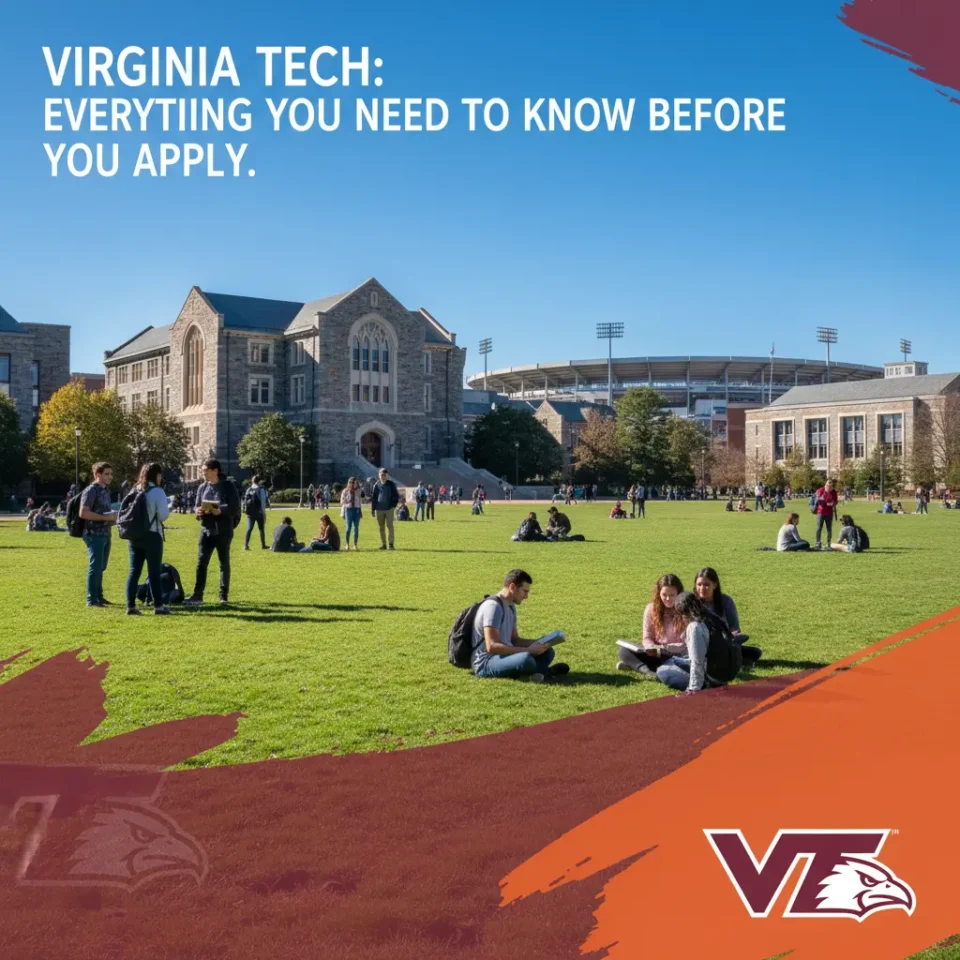
Virginia Tech sits in the Blue Ridge Mountains of Blacksburg, Virginia—and it’s one of those schools that grows on you fast. From its iconic Hokie Stone buildings to its reputation as a research powerhouse, Virginia Tech has carved out a unique place in American higher education. But what makes it worth your time and tuition? Here’s an honest look at what the university offers, who thrives there, and whether it’s the right fit for you.
A Brief History of Virginia Tech
Founded in 1872 as the Virginia Agricultural and Mechanical College, Virginia Tech has come a long way from its roots as a land-grant institution focused on farming and engineering. Today, it’s a comprehensive research university with over 37,000 students and a reputation that stretches well beyond the state of Virginia.
The university’s full name—Virginia Polytechnic Institute and State University—hints at its DNA. It has always been oriented toward the practical: solving real problems, building things that work, and preparing graduates for careers that matter.
Academics: Where Virginia Tech Stands Out
Virginia Tech isn’t the place to go if you want to study the arts in a vacuum. It’s an institution built around STEM, and it wears that identity with pride.
Engineering
The College of Engineering consistently ranks among the top engineering programs in the United States. Aerospace, civil, electrical, computer—take your pick. Graduates from these programs are recruited heavily by companies like Boeing, Lockheed Martin, and Amazon. The hands-on culture means students spend as much time in labs and design studios as they do in lecture halls.
Computer Science
Tech’s computer science program has surged in prestige over the past decade, reflecting broader industry demand. Students benefit from strong ties to Northern Virginia’s tech corridor—often called “the Silicon Valley of the East”—which makes internship and job placement unusually strong.
Business and Architecture
The Pamplin College of Business and the College of Architecture, Arts, and Design offer programs that consistently receive national recognition. The architecture program, in particular, has produced graduates who go on to shape skylines across the country.
Research Opportunities
Virginia Tech pours significant resources into research. The university consistently secures over $500 million in sponsored research funding annually, covering areas like cybersecurity, agricultural science, biomedical engineering, and sustainable energy. Undergraduates who seek out research opportunities tend to find them—faculty are generally open to student involvement, and the university has structures in place to support it.
Campus Life in Blacksburg
Blacksburg is a college town through and through. With a population of around 45,000—a large chunk of whom are students—the town revolves around the university in a way that creates a tight-knit, energetic atmosphere.
The Campus Aesthetic
The Hokie Stone architecture gives Virginia Tech one of the most visually distinctive campuses in the country. The uniform use of local limestone creates a cohesive look that feels permanent and serious, which oddly enough, makes the campus feel warmer rather than colder. The Drillfield—a large open green space at the center of campus—is where students gather, study, and decompress.
Housing and Social Life
First-year students are required to live on campus, which helps build community early. The residential experience ranges from traditional dorms to newer suite-style accommodations. Greek life is present but not dominant—about 15% of students participate—meaning the social scene isn’t monopolized by any single culture.
Sports Culture
Hokie football is a serious business. Lane Stadium on a game day is an experience that alumni talk about for decades. The atmosphere is loud, tribal, and genuinely fun, even if you’ve never watched a football game in your life. Virginia Tech competes in the Atlantic Coast Conference (ACC), and school pride runs deep across all sports.
Diversity and Campus Climate
Virginia Tech has made visible efforts to expand diversity and inclusion, though like many large research universities, it still has ground to cover. The student body is predominantly in-state, with roughly 70% of undergraduates from Virginia. International students make up around 10% of the total enrollment, bringing a global dimension to campus life—particularly in graduate programs.
The university’s response to the 2007 tragedy—one of the deadliest campus shootings in American history—shaped its identity in lasting ways. The April 16 Memorial on the Drillfield stands as a quiet, powerful reminder of that day and reflects a campus community that doesn’t take its bonds for granted.
Admissions: What Does It Take to Get In?
Virginia Tech is selective, though not at the ultra-competitive level of the Ivy League or flagship schools like UVA. The acceptance rate typically hovers around 55-65%, but competition varies significantly by program. Engineering and computer science applicants face a tougher road than those applying to other colleges within the university.
Strong applicants generally bring:
- A GPA in the 3.7–4.0 range (weighted)
- SAT scores in the 1200–1400 range or ACT scores between 27–32
- Demonstrated interest in their chosen field—extracurriculars, projects, and relevant experience matter
- A compelling personal statement that reflects clarity of purpose
Early action is available and recommended. Students who apply early signal genuine interest and tend to receive decisions faster, though it’s non-binding.
Cost and Financial Aid
In-state tuition at Virginia Tech runs significantly lower than out-of-state rates—a gap of roughly $20,000 per year. For Virginia residents, it offers strong value for a research university of its caliber. Out-of-state students should do their homework on financial aid packages before committing.
The university offers merit scholarships, need-based aid, and work-study programs. The Ut Prosim Scholars program, named after the university’s motto (“That I May Serve”), is one of the more competitive merit awards available to incoming students.
Career Outcomes
Virginia Tech graduates tend to land on their feet. The university’s co-op and internship programs are well-established, particularly in engineering and business. The proximity to Washington, D.C., and the Northern Virginia tech corridor opens doors that aren’t available at more geographically isolated schools.
Employers who recruit heavily from Virginia Tech include Northrop Grumman, Deloitte, Capital One, and the U.S. government in various capacities. Graduate school placement rates are strong for students with research experience and competitive GPAs.
Is Virginia Tech Right for You?
There’s a certain type of student who thrives at Virginia Tech: curious, practical, and willing to work hard in a demanding academic environment. Students who arrive expecting a lecture-heavy, hands-off education sometimes find the rigor jarring. But those who lean into the culture—who show up to office hours, pursue research, and join organizations that align with their interests—tend to leave with more than a degree.
The school has a strong identity. If that identity resonates with yours, Virginia Tech can be an exceptional match.
Take the Next Step
If Virginia Tech has landed on your shortlist, the best next step is a campus visit. Blacksburg is worth the trip—it’s the kind of place that either clicks with you or doesn’t, and that gut feeling matters.
Start your application at admissions.vt.edu, explore program-specific requirements for your intended college, and reach out to current students or alumni if you want unfiltered perspectives. The Hokie community is famously welcoming—don’t be surprised if a stranger in a maroon sweatshirt ends up giving you a 30-minute tour.
