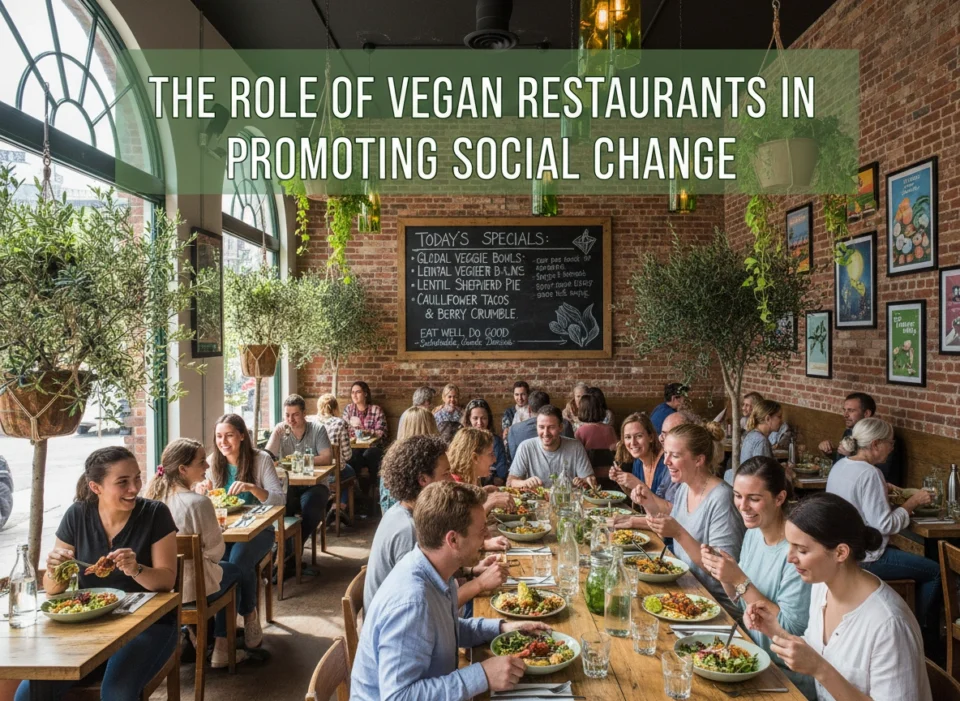
Dining out has always been about more than just sustenance; it is a cultural act that reflects our values, aspirations, and community identity. In recent years, a quiet but powerful revolution has taken place within the hospitality industry. Vegan restaurants, once relegated to the fringes of the culinary world, have moved to the center stage. They are no longer just serving food; they are serving a philosophy.
These establishments have become critical engines for social change, challenging long-held norms about consumption, ethics, and environmental responsibility. By making plant-based eating accessible, desirable, and economically viable, they are dismantling barriers to a sustainable future.
This article explores the multifaceted role vegan restaurants play in shaping society. We will examine their impact on environmental sustainability, their influence on animal welfare standards, their contribution to public health, and how they are forcing the broader food industry to adapt to a new era of conscious consumerism.
Normalizing Plant-Based Diets Through Culinary Excellence
For decades, the primary barrier to the widespread adoption of plant-based diets was the perception of sacrifice. Veganism was often viewed as a restrictive lifestyle defined by what one could not eat. Vegan restaurants have been instrumental in flipping this narrative by focusing on culinary innovation rather than dietary restriction.
From Niche to Mainstream
The shift from “health food stores” to high-concept dining has been pivotal. When a restaurant delivers a plant-based meal that rivals or exceeds the flavor profile of traditional meat dishes, it creates a powerful psychological shift in the consumer. It proves that ethical eating does not require a compromise on pleasure.
Establishments ranging from fast-casual chains to Michelin-starred innovators like Eleven Madison Park—which famously switched to a completely plant-based menu in 2021—demonstrate that vegetables can be the centerpiece of luxury. This “normalization” is crucial for social change. By integrating vegan options into the standard culinary lexicon, these restaurants strip away the stigma and political polarization often associated with veganism, making it an accessible choice for the average consumer.
The “Veto Vote” and Inclusivity
Restaurants also play a vital role in social inclusivity. Historically, a group of diners might avoid a restaurant if it didn’t cater to the “lowest common denominator” of dietary preferences. Today, the dynamic has shifted. Vegan restaurants are designing menus that appeal to omnivores, often using “gateway foods” like plant-based burgers or dairy-free pizzas. By creating spaces where diverse dietary groups can eat together without friction, these establishments foster a culture of inclusivity and introduce skeptics to plant-based options in a low-pressure environment.
Environmental Stewardship and Supply Chain Disruption
The environmental impact of animal agriculture is well-documented, contributing significantly to greenhouse gas emissions, deforestation, and water scarcity. Vegan restaurants act as a direct counterbalance to this system, not only through their own footprint but by reshaping supply chains.
Reducing the Carbon Footprint of Dining
Restaurants operate at a volume that dwarfs individual household consumption. When a popular restaurant creates a menu based on lentils, mushrooms, and grains rather than beef and dairy, the reduction in carbon emissions is substantial. A study from the University of Oxford suggests that cutting meat and dairy products from your diet could reduce an individual’s carbon footprint from food by up to 73%. Restaurants amplify this effect by thousands of covers per week.
Promoting Sustainable Agriculture
Many forward-thinking vegan restaurants go beyond simply avoiding meat; they actively support regenerative agriculture. By sourcing ingredients from local, organic farms that prioritize soil health, these businesses funnel capital into sustainable farming practices. This creates a market demand for diverse crops—such as ancient grains and heirlooms—reducing the agricultural reliance on monocultures like soy and corn intended for animal feed.
Furthermore, vegan restaurants often lead the charge in the “zero-waste” movement. Without the health risks associated with raw meat cross-contamination, plant-based kitchens can often compost more effectively and utilize “root-to-stem” cooking techniques, setting a new standard for resource efficiency in the hospitality sector.
Advancing Animal Welfare Through Passive Activism
Traditional animal rights activism often relies on exposing the cruelty of factory farming—a tactic that is effective but can sometimes alienate the general public. Vegan restaurants employ a strategy of “passive activism.” They advocate for animal welfare not through graphic imagery, but through the plate.
The Power of Delicious Alternatives
When a customer enjoys a crispy fried mushroom sandwich that mimics the texture of chicken, they are effectively voting against factory farming with their wallet. This positive reinforcement is a powerful tool for behavioral change. It allows consumers to align their actions with their values without feeling preached to.
By demonstrating that animal products are unnecessary for a satisfying meal, restaurants chip away at the cultural justification for industrial animal slaughter. This soft power approach helps shift the Overton window—the range of policies acceptable to the mainstream population—making eventual legislative changes regarding animal welfare more palatable to the public.
Public Health and Community Wellness
While not all vegan food is health food (vegan junk food is a rapidly growing category), the sector generally promotes better public health outcomes. Vegan restaurants are uniquely positioned to address the crisis of lifestyle-related diseases, such as heart disease, type 2 diabetes, and obesity.
Addressing Food Deserts
A critical aspect of social change is equity. Historically, fresh, plant-based food has been inaccessible to lower-income communities, often termed “food deserts.” However, a new wave of vegan entrepreneurs is challenging this by opening affordable plant-based concepts in underserved areas.
For example, the rapid rise of chains like Slutty Vegan in the United States demonstrates how culturally relevant branding and comfort food can bring plant-based options to communities that have traditionally been targeted by fast-food giants selling highly processed meat products. By making vegan food “cool” and accessible, these businesses are tackling health disparities and offering a lifeline in communities with high rates of hypertension and cholesterol.
Education on the Plate
Restaurants are informal classrooms. Menus often highlight the benefits of ingredients—fermented foods for gut health, nuts for healthy fats, and legumes for protein. This subtle education empowers diners to make healthier choices even when they cook at home. The visibility of balanced, plant-based meals challenges the misconception that protein must come from meat, reshaping public understanding of nutrition.
Influencing the Broader Food Industry
Perhaps the most significant role of vegan restaurants is their competitive influence on the broader food industry. They serve as R&D labs for the future of food, proving concepts that major corporations eventually adopt.
The Ripple Effect on Traditional Chains
The success of independent vegan restaurants has forced traditional fast-food giants and casual dining chains to adapt. Companies like Burger King, McDonald’s, and Starbucks have introduced significant plant-based options not out of altruism, but because they are losing market share to vegan competitors. This is the “vegan restaurant effect” in action: by raising the bar, they force the entire industry to evolve.
Innovation in Food Technology
Many food-tech breakthroughs, such as mycelium-based bacon or precision-fermented dairy, debut in high-end vegan restaurants before hitting grocery store shelves. Chefs provide critical feedback to food scientists, refining textures and flavors. This symbiotic relationship accelerates the development of alternative proteins, bringing us closer to a food system that relies less on animal agriculture.
Conclusion
Vegan restaurants are far more than places to eat; they are hubs of social transformation. By proving that plant-based food can be delicious, profitable, and culturally relevant, they are rewriting the rules of the global food system.
Their impact cascades through society: they lower the carbon footprint of dining, offer a passive yet powerful form of animal advocacy, improve public health access, and force the massive machinery of the industrial food complex to pivot toward sustainability.
For the consumer, supporting these establishments is one of the most effective ways to vote for a different future. As these restaurants continue to innovate and expand, they move us closer to a world where compassion, sustainability, and health are not optional add-ons to our meal, but the main course.
Actionable Next Steps
- Explore Local Options: Commit to dining at a fully plant-based restaurant once a week to support local sustainable businesses.
- Try “Veto Vote” Dining: Next time you organize a group dinner, suggest a high-rated vegan restaurant to introduce friends to the cuisine.
- Look for Sourcing: When dining out, ask restaurants about their sourcing practices. Customer interest drives business decisions toward local and organic suppliers.
Please visit website for more info.
