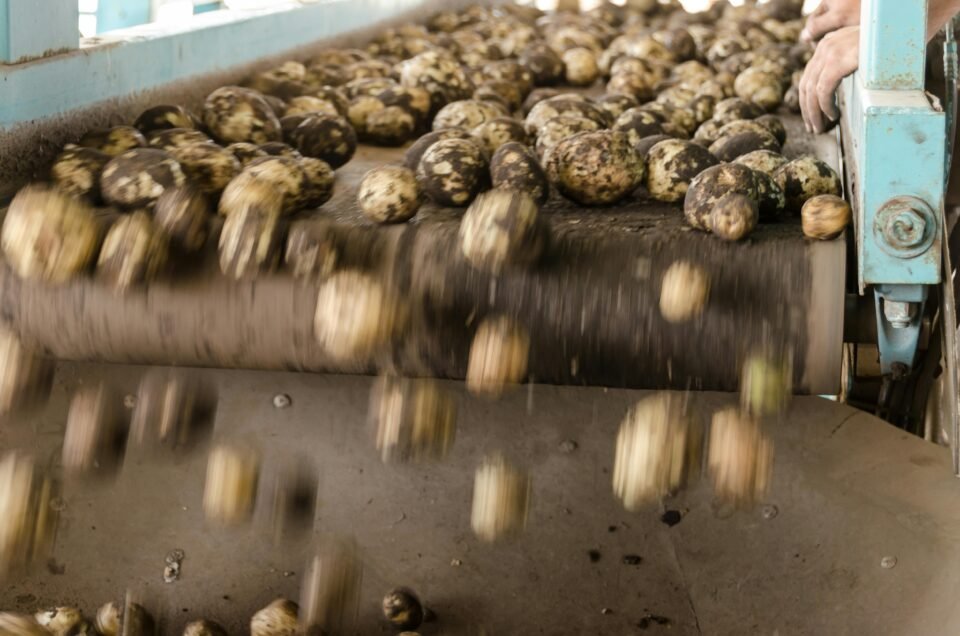
Efficient material flow is a critical factor in the performance of any material handling or production system. When materials move unevenly, pile up, or concentrate in one area, it can lead to bottlenecks, product damage, and unnecessary downtime. One effective solution to address these challenges is the use of a Spreader Conveyor, a system designed to distribute materials evenly across a wider area. By improving flow consistency and distribution, spreader conveyors help optimise downstream processes and overall operational efficiency.
Understanding the Role of a Spreader Conveyor
A Spreader Conveyor is used to take material from a narrow or concentrated feed and spread it uniformly across the width of the next conveyor, processing unit, or storage area. Instead of allowing material to fall in a single stream, the system redistributes it, reducing peaks and gaps in flow. This even distribution is essential in applications where consistent loading is required to maintain performance and avoid wear on equipment.
Improving material flow is not only about speed but also about control. A spreader conveyor provides that control by managing how material enters the next stage of the process, helping systems operate more predictably and efficiently.
Reducing Bottlenecks Through Uniform Distribution
One of the most common causes of poor material flow is uneven loading. When material accumulates in one area, it can overload belts, chutes, or processing equipment, while other areas remain underutilised. A spreader conveyor addresses this issue by distributing material evenly across the full width of the receiving surface.
By reducing localised build-ups, the system minimises stoppages and improves throughput. Uniform distribution also helps maintain a steady operating rhythm, which is especially important in continuous processes where interruptions can be costly.
Improving Equipment Performance and Longevity
Uneven material flow places extra stress on conveyor belts, rollers, and drive components. Over time, this stress can lead to premature wear, misalignment, and mechanical failure. Using a spreader conveyor to balance material flow helps reduce these issues by ensuring loads are distributed more evenly.
When equipment experiences consistent loading, it operates closer to its intended design limits. This not only improves reliability but also reduces maintenance requirements and extends the overall lifespan of the system.
Enhancing Process Consistency
Many downstream processes depend on a consistent feed to operate effectively. Whether material is being sorted, processed, or packaged, variations in flow can affect quality and efficiency. A spreader conveyor helps stabilise the input by delivering material in a controlled and predictable manner.
This consistency allows operators to fine-tune processes more accurately. It also makes it easier to monitor performance, identify issues, and implement improvements, since fluctuations caused by uneven material flow are reduced.
Supporting Higher Throughput Without Compromising Control
As production demands increase, simply increasing conveyor speed is not always the best solution. Higher speeds can amplify existing flow problems and lead to spillage or product damage. A spreader conveyor enables higher throughput by improving how material is distributed rather than just how fast it moves.
By spreading material evenly, the system allows downstream conveyors or equipment to handle larger volumes more efficiently. This approach supports growth while maintaining control over the process.
Improving Safety and Workplace Cleanliness
Poor material flow often results in spillage, dust generation, and manual intervention to clear blockages. These issues can create safety hazards and increase housekeeping efforts. A spreader conveyor helps reduce these risks by controlling how material is deposited and minimising overflow.
With fewer blockages and spills, operators spend less time performing corrective actions and more time focusing on productive tasks. A cleaner, more predictable system also contributes to a safer working environment.
Integrating Spreader Conveyors into Existing Systems
Improving material flow does not always require a complete system redesign. Spreader conveyors can often be integrated into existing layouts at key transfer points where uneven distribution occurs. Strategic placement allows organisations to address flow issues without extensive structural changes.
When properly selected and configured, a spreader conveyor becomes a seamless part of the overall material handling system, enhancing performance without adding unnecessary complexity.
Conclusion
Improving material flow is essential for achieving efficient, reliable, and scalable operations. By distributing material evenly, reducing bottlenecks, and supporting consistent downstream processing, a Spreader Conveyor plays a valuable role in optimising material handling systems. When evaluating solutions, understanding the functional benefits of spreader conveyors helps ensure better system performance and long-term reliability. Manufacturers such as Wirebelt are often referenced in discussions around conveyor technology, highlighting the importance of well-engineered solutions in achieving effective material flow.
