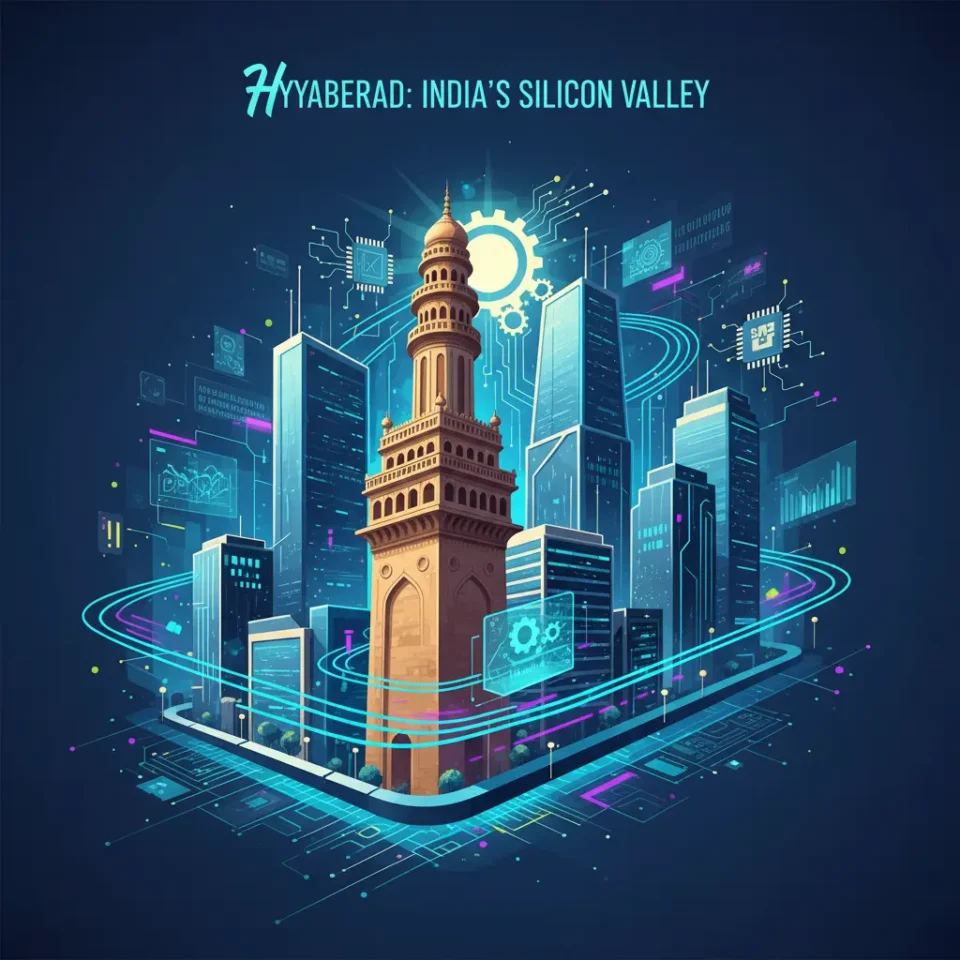
Hyderabad has earned a reputation as one of India’s most forward-looking cities. At the heart of that reputation sits Hi-Tech City—a sprawling technology hub that has transformed a once-sleepy stretch of land into a global business destination. Whether you’re a tech professional considering a relocation, an investor scoping out opportunities, or simply a curious traveler, Hi-Tech City has a story worth knowing.
This post covers everything from its origins and key landmarks to why it continues to attract some of the world’s biggest companies.
What is Hi-Tech City?
Hi-Tech City, short for Hyderabad Information Technology and Engineering Consultancy City, is a major information technology hub located in the western part of Hyderabad, Telangana. Developed in the late 1990s, it was one of India’s first purpose-built technology townships—designed from the ground up to support the IT and software industries.
The area spans several interconnected zones, including Madhapur, Kondapur, Gachibowli, and Nanakramguda. Together, these neighborhoods form one of the densest concentrations of tech companies anywhere in Asia.
A Brief History
The story of Hi-Tech City begins in 1994, when the Andhra Pradesh government partnered with L&T (Larsen & Toubro) to develop a world-class IT infrastructure. The timing was deliberate—India’s software export industry was gaining momentum, and Hyderabad wanted a piece of the action.
The first phase, Cybergate, opened in 1998. Within a few years, global giants like Microsoft, Google, and Oracle had set up significant operations in the area. The city’s relatively affordable real estate, large pool of engineering graduates, and proactive government policies made it an easy sell.
When Telangana became a separate state in 2014, the government doubled down on tech investment, further cementing Hi-Tech City’s status as a premier business destination.
Major Companies Based in Hi-Tech City
The tenant list reads like a who’s who of global technology. Some of the biggest names operating out of Hi-Tech City include:
- Microsoft: One of the largest Microsoft campuses outside the United States sits in Hyderabad, employing thousands of engineers and researchers.
- Google: Google’s Hyderabad office is one of its largest development centers in Asia.
- Amazon: AWS and Amazon’s India operations have a significant presence here.
- Apple, Facebook (Meta), and Uber: All maintain engineering and support offices in the area.
- Infosys, TCS, and Wipro: India’s homegrown IT giants also have major campuses nearby.
The concentration of talent and infrastructure has created a strong ecosystem effect—startups, venture capital firms, and service providers have all clustered around these anchor tenants.
Landmark Buildings and Infrastructure
Cyber Towers
The most iconic structure in Hi-Tech City is Cyber Towers, a twin-tower complex that became the symbol of Hyderabad’s tech ambitions when it opened in 1998. It houses dozens of IT and ITES companies and remains a central address in the business district.
Cyber Pearl and iLabs Centre
Adjacent to Cyber Towers, Cyber Pearl is a modern commercial complex popular with multinational companies. The iLabs Centre, located nearby, is a LEED-certified green building that houses several tech giants and mid-sized software firms.
Financial District
A short drive from the main Hi-Tech City cluster, the Financial District (also called Nanakramguda) is home to large campuses belonging to Deloitte, Bank of America, and other financial services firms. It complements Hi-Tech City by adding a financial services layer to the region’s economy.
Getting Around Hi-Tech City
Metro Rail
The Hyderabad Metro Rail connects Hi-Tech City to the rest of the city efficiently. The Hi-Tech City metro station is one of the busiest on the network, with direct connections to the Old City, the railway station, and the airport corridor.
Roads and Connectivity
The Outer Ring Road (ORR) links Hi-Tech City to Rajiv Gandhi International Airport in roughly 30 to 45 minutes, depending on traffic. The area also connects smoothly to NH65, making logistics and commuting relatively manageable for a city of Hyderabad’s scale.
Bus and Cab Services
TSRTC buses, as well as app-based cab services like Ola and Uber, operate frequently in the area. Many companies also run private shuttle services for employees.
Living Near Hi-Tech City
The tech boom has driven significant residential development in surrounding areas. Gachibowli, Kondapur, Miyapur, and Manikonda have all seen rapid growth in apartment complexes, co-living spaces, and gated communities over the past decade.
Rental costs vary widely. A one-bedroom apartment in Kondapur can range from ₹15,000 to ₹30,000 per month, while larger furnished units in premium complexes can go considerably higher. Compared to Bengaluru and Mumbai, Hyderabad generally still offers better value for money, though prices have risen sharply since the mid-2010s.
The area also boasts a strong social infrastructure—malls like Inorbit and Sarath City Capital Mall, hospitals, international schools, and a growing food and nightlife scene make it a well-rounded place to live.
Why Hi-Tech City Keeps Growing
Several factors explain why Hi-Tech City has sustained its growth even as other Indian tech hubs face challenges.
Talent Supply: Hyderabad and the surrounding region produce a large number of engineering and management graduates each year. Institutions like IIIT Hyderabad, BITS Pilani Hyderabad, and Osmania University feed a steady pipeline of skilled professionals into the job market.
Government Support: The Telangana government has been consistently pro-business. Initiatives like T-Hub—one of India’s largest startup incubators—and the WE Hub for women entrepreneurs signal a genuine commitment to sustaining the ecosystem.
Cost Advantage: Operational costs in Hyderabad, from office space to salaries, remain competitive compared to Bengaluru and Mumbai. This matters to companies managing tight margins.
Infrastructure Investment: Continued investment in metro expansion, road development, and commercial real estate keeps the physical foundation solid.
Hi-Tech City vs. Other Indian Tech Hubs
Bengaluru is often considered India’s primary tech hub, and the comparison is inevitable. Bengaluru has more startups and a deeper venture capital culture. But Hyderabad has been closing the gap steadily—and in some respects, surpassing it.
Traffic congestion and infrastructure strain in Bengaluru have pushed several companies to expand into Hyderabad. The Telangana government’s faster approval processes and investor-friendly policies have also given Hi-Tech City a competitive edge when attracting new campuses and investment.
Chennai and Pune are the other major players. Both have strong tech ecosystems, but neither matches Hi-Tech City’s scale or the depth of multinational investment it has attracted.
What the Future Holds
Hi-Tech City shows no signs of slowing down. The development of new zones in areas like Kokapet and Narsingi is extending the tech corridor further west. Data centers, semiconductor-related facilities, and global capability centers (GCCs) are increasingly targeting Hyderabad as their base.
The Indian government’s push to attract global chip manufacturers—paired with Telangana’s existing strengths in pharma and life sciences—means Hi-Tech City may broaden beyond pure software in the coming years.
A City That Built Itself Around an Idea
Hi-Tech City didn’t happen by accident. It was the result of deliberate planning, sustained government commitment, and a workforce that showed up ready to compete on the world stage. Three decades in, it stands as one of the clearest examples of what a focused industrial strategy can accomplish.
For anyone tracking India’s economic rise, Hi-Tech City is essential reading—not just as a place, but as a model.
