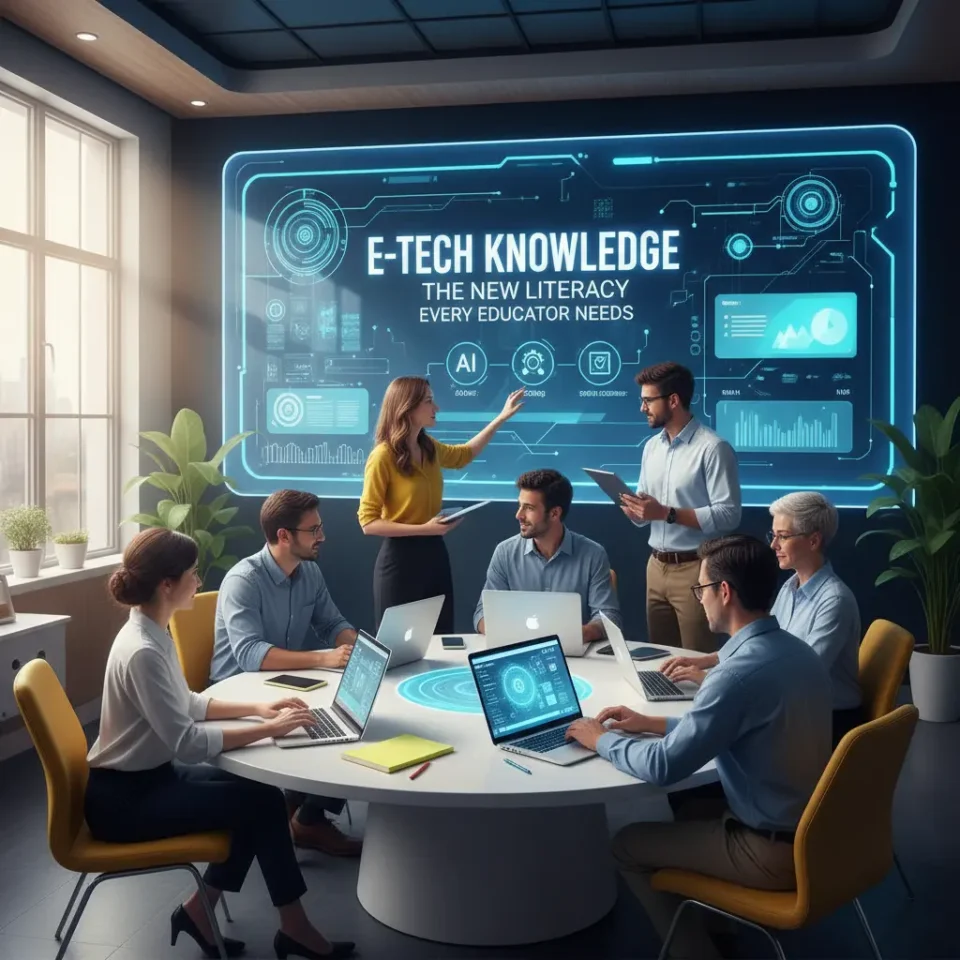
The classroom looks nothing like it did 20 years ago. Interactive whiteboards replaced chalkboards. Cloud-based assignments replaced paper handouts. And now, AI-driven tutoring systems are beginning to replace the one-size-fits-all lecture format that has dominated education for centuries. Educational technology—or e-tech—is no longer a niche interest for forward-thinking schools. It’s becoming a core competency for educators, administrators, and students alike.
But keeping up with the pace of change is genuinely hard. New tools emerge constantly, and not all of them deliver on their promises. The challenge isn’t finding e-tech—it’s knowing which tools matter, how to use them effectively, and where the field is heading next.
This post breaks down the e-tech landscape from the ground up: where it started, what’s driving it forward, which tools deserve your attention, and what the next wave of innovation looks like for learning environments around the world.
How Digital Learning Has Evolved
Early digital learning was simple by today’s standards. The first wave of online education in the 1990s and 2000s meant static PDFs, basic video lectures, and discussion forums. Platforms like Blackboard and early versions of Moodle offered structure, but not much interactivity. Students consumed content. They didn’t really engage with it.
The shift began when mobile devices made learning portable and social media made participation habitual. Suddenly, learners expected content to be short, responsive, and interactive. Platforms adapted. Gamification, peer-to-peer feedback, and micro-credentials became standard features rather than add-ons.
Today’s e-tech landscape is driven by artificial intelligence. Adaptive learning systems can now assess a student’s performance in real time and adjust the difficulty and style of content accordingly. Natural language processing powers AI tutors that respond to student questions with contextually relevant answers. The gap between “online course” and “personalized education” is narrowing fast.
Why Advanced E-Tech Knowledge Improves Student Engagement
Engagement is one of the most persistent challenges in education. Passive learning—sitting, listening, taking notes—produces limited retention. Research in cognitive science consistently shows that active participation, immediate feedback, and emotional connection to material produce far better outcomes.
E-tech tools are uniquely equipped to address this. Interactive software encourages students to solve problems rather than memorize solutions. Real-time analytics allow educators to identify struggling students before they fall too far behind. Multimedia content—video, audio, simulation—caters to different learning styles within the same classroom.
There’s also the motivational dimension. When students see progress tracked visually, earn badges for completing milestones, or collaborate with peers across different schools or countries, their sense of ownership over their learning increases. That shift from passive to active learner is where e-tech makes its strongest case.
Essential E-Tech Tools Worth Knowing
Learning Management Systems (LMS)
An LMS is the backbone of most digital learning environments. Platforms like Canvas, Moodle, and Google Classroom allow educators to distribute content, manage assignments, track student progress, and communicate—all from a single interface. Choosing the right LMS depends on the scale of your institution, your budget, and how much customization you need.
For smaller organizations or individual educators, lightweight options like Teachable or Thinkific offer a faster path to getting courses online without the complexity of enterprise-level systems.
Interactive and Adaptive Learning Software
Tools like Kahoot!, Nearpod, and Pear Deck transform passive lessons into interactive sessions. Students respond to prompts, vote on answers, and complete activities in real time—giving educators instant insight into how well the material is landing.
Adaptive learning platforms like Khan Academy and Knewton go further by adjusting content difficulty based on individual student performance. These systems are especially powerful for foundational subjects like math and literacy, where gaps compound quickly if not addressed early.
Collaboration and Communication Platforms
Microsoft Teams for Education, Slack, and Padlet have become essential for facilitating collaboration beyond the classroom. Group projects, peer reviews, and asynchronous discussions all happen more naturally when students have a dedicated digital space designed for it.
How Educators Can Stay Current with Rapid Tech Changes
The pace of e-tech innovation can feel overwhelming. A tool that’s considered cutting-edge today may be outdated within three years. Staying current requires a deliberate strategy, not just occasional professional development days.
Follow credible sources. EdSurge, EdTech Magazine, and the EDUCAUSE Review consistently publish well-researched coverage of trends, tools, and policy developments in educational technology.
Join professional communities. Organizations like ISTE (International Society for Technology in Education) offer certification programs, annual conferences, and peer networks specifically designed for educators navigating the e-tech space.
Experiment with a small scope. Rather than overhauling an entire curriculum, pilot one new tool with a single class or unit. Collect feedback, evaluate outcomes, and scale what works.
Build cross-functional relationships. Educators who collaborate with IT departments, instructional designers, and subject matter experts develop a much broader understanding of what’s technically possible—and practical—within their institution.
E-Tech in Action: Real-World Implementation
Georgia State University used predictive analytics to identify students at risk of dropping out. By analyzing data points like course performance, financial aid status, and engagement patterns, advisors could intervene proactively. The result: a significant increase in graduation rates over a six-year period, particularly among first-generation and low-income students.
Mount Vernon Presbyterian School in Atlanta integrated project-based learning with digital tools across all grade levels. Students used platforms like Flipgrid and Adobe Spark to document and present their work, developing both content knowledge and digital communication skills simultaneously.
These examples share a common thread: successful e-tech implementation isn’t about the tool itself. It’s about aligning the tool with a clear educational goal and giving teachers the support they need to use it well.
Future Trends Shaping the E-Tech Landscape
Virtual Reality Classrooms
VR is moving from novelty to practical application in education. Medical schools are already using VR simulations to train surgeons. History classes are experimenting with immersive reconstructions of historical events. As hardware costs fall and content libraries expand, VR-based learning will become accessible to a much broader range of institutions.
Personalized Learning Paths
The shift toward individualized education is accelerating. AI systems can now generate customized learning paths based on a student’s prior knowledge, preferred learning style, and career goals. This approach challenges the traditional model where all students move through the same content at the same pace—and the early results are promising.
Microlearning and Credential Stacking
Bite-sized learning modules, paired with stackable digital credentials, are reshaping how professionals approach continuing education. Rather than committing to a two-year degree, learners can earn targeted certifications in specific skills—then build toward larger qualifications over time. Platforms like Coursera, edX, and LinkedIn Learning have made this model widely accessible.
The Long-Term Value of Mastering E-Tech
E-tech knowledge is increasingly tied to career outcomes. Educators who understand how to design and deliver effective digital learning experiences are in high demand. Corporate trainers, instructional designers, curriculum developers, and learning experience designers all need fluency in the same tools and frameworks that are reshaping formal education.
For students, digital literacy developed through well-designed e-tech environments translates directly into workplace readiness. Collaboration tools, data interpretation, and the ability to learn independently using digital resources are skills that employers across every industry now expect.
The transition to technology-enhanced learning isn’t without its challenges—equity gaps, data privacy concerns, and the risk of over-relying on tools at the expense of human connection are all legitimate concerns worth addressing. But the direction of travel is clear. E-tech knowledge isn’t a competitive advantage anymore. It’s baseline literacy for anyone working in or shaping education.
Start with one tool. Build one skill. The compounding effect of consistent, deliberate engagement with e-tech will pay dividends for years to come.
