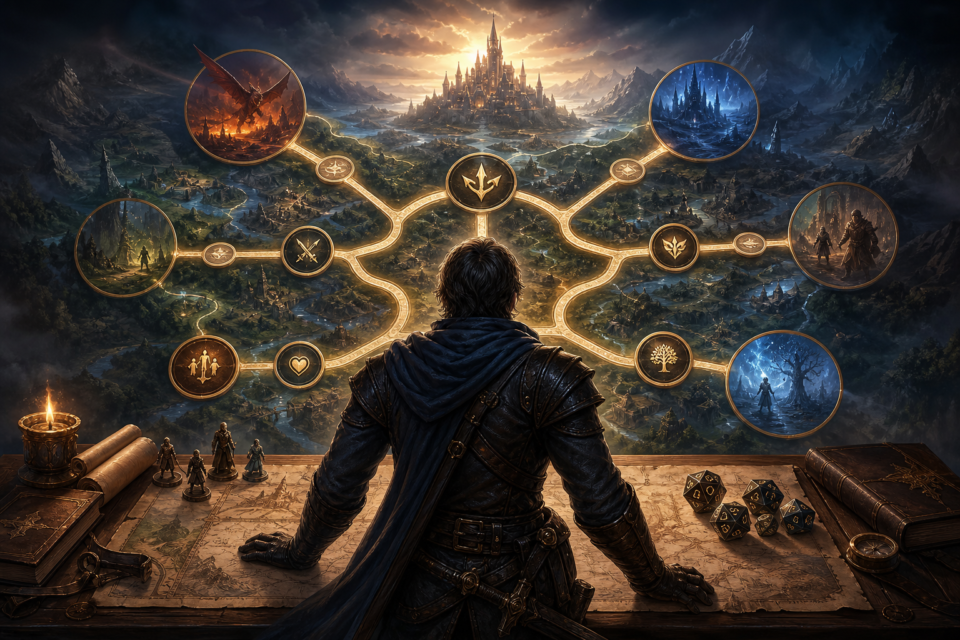
Adult RPG games combine role-playing systems with themes intended for players aged 18 and over. The strongest examples are not defined by shock value. They give players meaningful decisions, readable progression and clear information about mature content before play begins.
This Gamcore explainer is non-explicit and intended for adults in the UK.
What makes a game an RPG?
Role-playing games let the player shape a character or take responsibility for an established protagonist. Choices may affect abilities, relationships, quests or the ending. Some games emphasise combat and exploration; others focus on dialogue and social decisions.
A useful RPG system shows cause and effect. Players should understand how experience, skills, equipment or reputation change their options rather than being pushed through unexplained outcomes.
Character progression
Progression creates a sense that time and decisions matter. Traditional systems use levels, attributes and skill trees. Narrative RPGs may track trust, knowledge or faction standing instead. Good progression supports different play styles without requiring repetitive tasks simply to reach the next story scene.
- Attributes describe broad strengths such as perception or diplomacy.
- Skills unlock practical actions or dialogue options.
- Reputation changes how groups respond to the character.
- Relationships may open or close personal story paths.
Choice and consequence
Not every dialogue choice needs to change the ending, but important decisions should receive a meaningful response. Look for games that communicate boundaries, avoid misleading choices and provide save options before major branches. Mature themes benefit from especially clear content notes and consent-aware writing.
Story systems and replay value
Branching quests, alternative character builds and different alliances can make a second playthrough worthwhile. Replay value is strongest when paths offer genuinely different information or challenges, not when content is hidden behind arbitrary repetition.
Content boundaries and player control
Because adult RPGs can cover sensitive themes, look for content notes, consent-aware writing and options to skip or fade mature scenes. Clear controls do not weaken a story; they help adults decide whether a particular experience is appropriate for them. Public communities should also explain moderation rules and protect personal information.
Players who prefer dialogue over statistics may also enjoy the Gamcore guide to adult visual novels.
How to assess an adult RPG
- Read the age rating and content information.
- Check whether mature scenes can be skipped or adjusted.
- Look for clear save, accessibility and privacy controls.
- Review the payment model before committing to a long campaign.
- Use independent reviews to understand the balance of story and systems.
Frequently asked questions
Are all adult RPGs explicit?
No. Adult can refer to complex themes, strong language, violence, relationships or age-restricted material. Content varies widely, so read specific notices rather than assuming.
What is the difference between an RPG and a visual novel?
RPGs usually place more emphasis on character statistics, exploration or mechanical progression. Visual novels generally focus on reading, dialogue and branching narrative. Some titles combine both.
Explore more educational coverage in RPG & Visual Novels and learn how our editorial approach works on About Gamcore.
