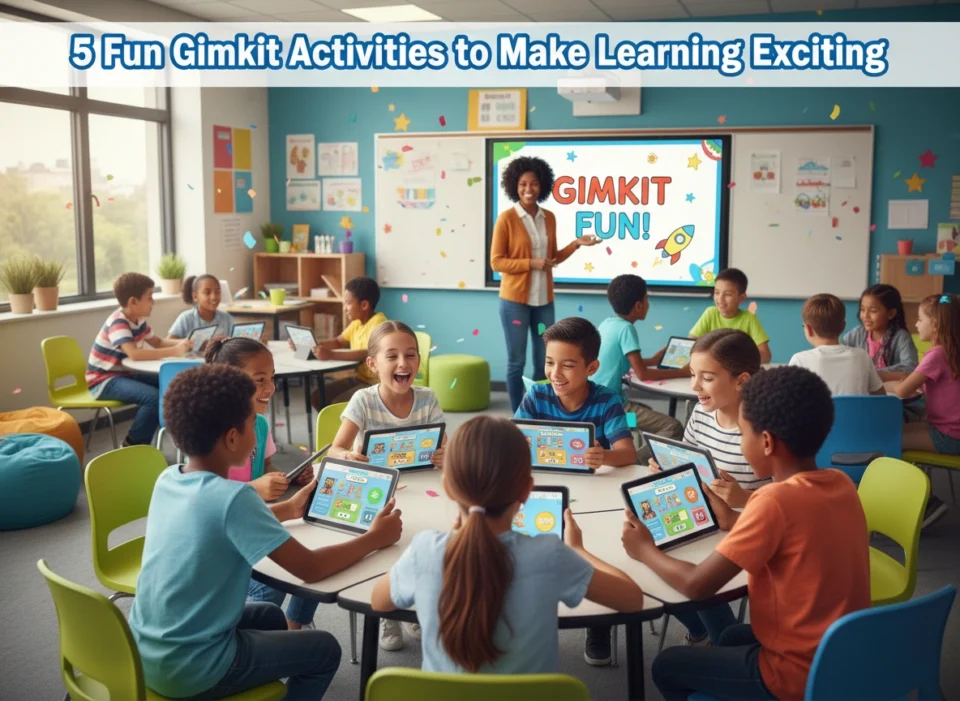
Keeping students engaged is a constant goal for educators. Traditional teaching methods don’t always capture the attention of today’s digitally native learners. This is where gamified learning platforms can make a significant difference. One such tool making waves in classrooms is Gimkit, a live quiz game designed by a high school student to make learning feel more like a game than a chore. Gimkit combines the excitement of competition with strategic gameplay, creating a uniquely powerful educational experience. Unlike simple quiz platforms, it integrates game mechanics and in-game currency, motivating students to answer questions correctly to earn advantages. This article will explore five specific Gimkit activities that you can use to transform your classroom into a dynamic and exciting learning environment.
What Makes Gimkit a Valuable Classroom Tool?
Before diving into specific activities, it’s important to understand why Gimkit stands out. The platform was built with the student experience at its core. Instead of just answering questions for points, students earn in-game cash. They can then reinvest this cash into upgrades and power-ups, adding a layer of strategy that keeps them invested in the game.
This model encourages mastery over memorization. Students often have to answer a question multiple times to progress, reinforcing the material through repetition. The element of strategy also levels the playing field; a student who answers fewer questions but manages their in-game resources wisely can still compete with faster peers. This blend of knowledge, strategy, and a bit of luck makes Gimkit an incredibly effective tool for review sessions, formative assessments, and engaging homework assignments.
1. Classic Mode: The Foundation of Fun
The original and most straightforward Gimkit mode is “Classic.” It’s the perfect starting point for both teachers and students new to the platform. In this mode, students answer questions to earn money. The game can be played individually or in teams, and the goal is to reach a specific cash target or have the most money when the timer runs out.
How It Works
You set up a “Kit” of questions on any topic. During the game, students answer these questions on their own devices. A correct answer earns them a set amount of cash, while an incorrect answer deducts money. Between questions, students can visit the “Shop” to purchase upgrades like earning more money per question or multiplying their earnings streak. This simple economic model adds a compelling strategic layer.
Tips for Implementation
- Set Clear Goals: Decide if you want the game to be time-based or race-to-a-goal. A 10-15 minute time limit works well for a quick review or exit ticket. A cash goal, like being the first to reach $10,000, can foster a more intense, competitive atmosphere.
- Encourage Strategic Thinking: Before starting, briefly discuss the upgrades available in the Shop. You can ask students to think about whether it’s better to save up for expensive upgrades or buy cheaper ones early on. This conversation adds a layer of critical thinking to the activity.
- Use for Review: Classic mode is ideal for reviewing a unit before a test. The repetition helps solidify concepts, and the competitive nature makes studying feel less like a burden.
2. Trust No One: A Game of Social Deduction
Inspired by the popular game “Among Us,” “Trust No One” turns your review session into a thrilling mystery. In this mode, students are divided into two groups: Crewmates and Impostors. The Crewmates must complete tasks (answering questions) to earn power, while the Impostors try to sabotage them without revealing their identity.
How It Works
Crewmates work together to answer enough questions to generate the required amount of power and win the game. Impostors, who appear as Crewmates, also answer questions but their goal is to blend in and use special powers to disrupt the group. Periodically, the game pauses for a team meeting where students discuss suspicious behavior and vote to eject who they think is an Impostor.
Why It’s Engaging
“Trust No One” is exceptionally engaging because it requires communication and critical thinking beyond just knowing the content. Students must observe their peers, make logical deductions, and persuade others of their innocence or someone else’s guilt. This is an excellent way to practice communication skills while reinforcing academic material.
Tips for Implementation
- Establish Ground Rules: Since this game involves accusation and voting, set clear expectations for respectful communication. Remind students to base their votes on in-game evidence, not personal feelings.
- Ideal for Smaller Groups: This mode works best in a classroom setting where students can see and talk to each other. For remote learning, using a concurrent video call can help replicate the experience.
- Focus on the Discussion: The learning happens not just in answering questions, but also in the team meetings. Encourage students to articulate their reasoning. Why do they suspect a particular player? What evidence do they have?
3. The Floor is Lava: High-Stakes Survival
For a fast-paced, high-energy activity, “The Floor is Lava” is an unbeatable choice. The concept is simple: students must answer questions correctly to build platforms and climb higher to escape the rising lava. It’s a race against time and gravity that will have every student on the edge of their seat.
How It Works
All students start at the bottom of the screen. As the game progresses, the lava level slowly rises. To move up, students must answer questions. Each correct answer allows them to jump to a higher platform. The last player (or team) standing wins. If a student answers incorrectly, they don’t move, making them more vulnerable to the encroaching lava.
Why It’s Engaging
The constant threat of the rising lava creates a sense of urgency that motivates students to answer quickly and accurately. Unlike Classic mode where a wrong answer just costs money, here it could mean elimination. This mode is purely about survival, which taps into a primal competitive instinct. It’s also highly visual, making it easy for students to track their progress and the progress of their classmates.
Tips for Implementation
- Use for Quick Drills: This mode is perfect for drilling vocabulary, math facts, or simple identification questions where speed is a factor.
- Team Mode for Collaboration: Switch to team mode to foster collaboration. In this setting, every team member contributes to the team’s overall elevation. This ensures that all students feel involved and reduces the pressure on individuals.
- Keep It Short and Sweet: “The Floor is Lava” is intense. A 5-10 minute game is usually enough to get the energy up without causing burnout. You can play multiple rounds with different question sets.
4. Humans vs. Zombies: Strategic Team Play
“Humans vs. Zombies” is a team-based game that pits two factions against each other in a battle for survival. One team, the Humans, must answer questions to earn shields and survive. The other team, the Zombies, answers questions to break through the Human defenses.
How It Works
The game starts with all players as Humans. After a short period, a few players are randomly turned into Zombies. Humans answer questions to earn and stockpile shields. Zombies answer questions to launch attacks and convert Humans to their side. The game ends when all Humans are turned into Zombies or when the Humans survive until the time runs out.
Why It’s Engaging
This mode excels at building team spirit and strategic thinking. Humans must work together to build a strong defense, while Zombies must coordinate their attacks. The dynamic nature of the game—where a teammate can suddenly become an opponent—keeps everyone on their toes. It also provides a narrative context that can make a standard review session feel like an epic struggle.
Tips for Implementation
- Balance the Teams: The game settings allow you to control how many Zombies start the game. For a larger class, having two or three starting Zombies usually creates a good balance.
- Discuss Strategy Mid-Game: Consider a brief “strategy pause” halfway through. Allow the Human team to discuss how to best allocate their shields and let the Zombies coordinate their next target. This reinforces teamwork and planning skills.
- Connect to Thematic Content: This mode is perfect for subjects with inherent conflicts, such as history (e.g., one side represents a historical army) or biology (e.g., viruses vs. immune cells).
5. Draw That: A Creative Twist on Assessment
Breaking away from the multiple-choice format, “Draw That” challenges students to demonstrate their understanding visually. In this mode, one student is given a term from your question Kit and must draw it, while the other students guess what it is.
How It Works
You create a Kit with terms you want students to review (e.g., “mitochondria,” “metaphor,” “Pythagorean theorem”). The game selects one student to be the artist. They see the word and are given a simple set of drawing tools to illustrate it on the screen. The other students type their guesses in the chat. The first student to guess correctly, and the artist, both earn points.
Why It’s Engaging
“Draw That” taps into a different kind of intelligence. It allows artistic students to shine and challenges all students to think abstractly and make connections between a concept and its visual representation. The guessing aspect is fast-paced and fun, and the often-humorous drawings add a lighthearted element to the classroom.
Tips for Implementation
- Choose Concrete Nouns and Concepts: This mode works best with vocabulary or concepts that can be drawn, even abstractly. Avoid overly complex or theoretical terms that are difficult to visualize.
- Set Expectations for Drawings: Remind students that artistic perfection is not the goal. Simple stick figures and symbols are perfectly acceptable. The aim is to communicate an idea, not create a masterpiece.
- Use as a Warm-Up or Brain Break: “Draw That” is a fantastic way to start a class to get students thinking creatively or to use as a mid-lesson brain break to re-energize the room.
Conclusion: Making Learning Unforgettable
Gimkit offers a powerful suite of tools that go far beyond simple digital flashcards. By incorporating elements of strategy, competition, and creativity, these activities can transform mundane review sessions into memorable and highly effective learning experiences. From the strategic depth of “Trust No One” to the frantic fun of “The Floor is Lava,” there is a Gimkit mode to fit nearly any classroom need and subject area.
The true benefit of using Gimkit is its ability to boost student engagement and motivation. When students are having fun, they are more likely to participate, persevere through challenges, and ultimately, retain what they have learned. We encourage you to explore these five activities in your classroom. Start with a simple “Classic” game and see how your students respond. You might just find that a little friendly competition is exactly what you need to make learning exciting again.
Please click here for more info.
